The Vestiges

There is a town in England called Rye that is one of the five “Cinque Ports” towns of southern Britain—five ports that used to face off against attackers and welcome traders from across the Channel. Rye was right on the water and at the mouth of the River Rother. Over time the Rother changed course and began to silt up. The people of the port argued over land reclamation and dredging, but couldn’t keep ahead of the changing tide. Rye, once a bustling town with a deep water port, is now two miles inland. It remains as a quaint fishing village and wonderful tourist destination. The Mermaid Inn, once the headquarters of pirates and smugglers, serves a cozy high tea.
Rye is a vestige.
I love vestiges. If someone gave me a grant, I would wander the earth looking for examples of what remains despite the extinction of their original purpose. One doesn’t have to look further than one’s own fingernails to find the vestiges of the few tools all mammals are born with. Remnants of claws that once gripped tree bark, defended against attack, and opened peanut packages back when those were still served on planes. Back when we flew in planes.
Whales have vestigial bones, floating in their blubbery mass. The slowly disappearing back legs of a once land-bound mammal.
The anthropocene landscape is littered with architectural vestiges. Many old buildings in upstate New York have an odd block of stones near their entries. These were built to let people step gracefully down out of their horse drawn carriages or sleighs. Now they’re just lonely stone stairways to nowhere.
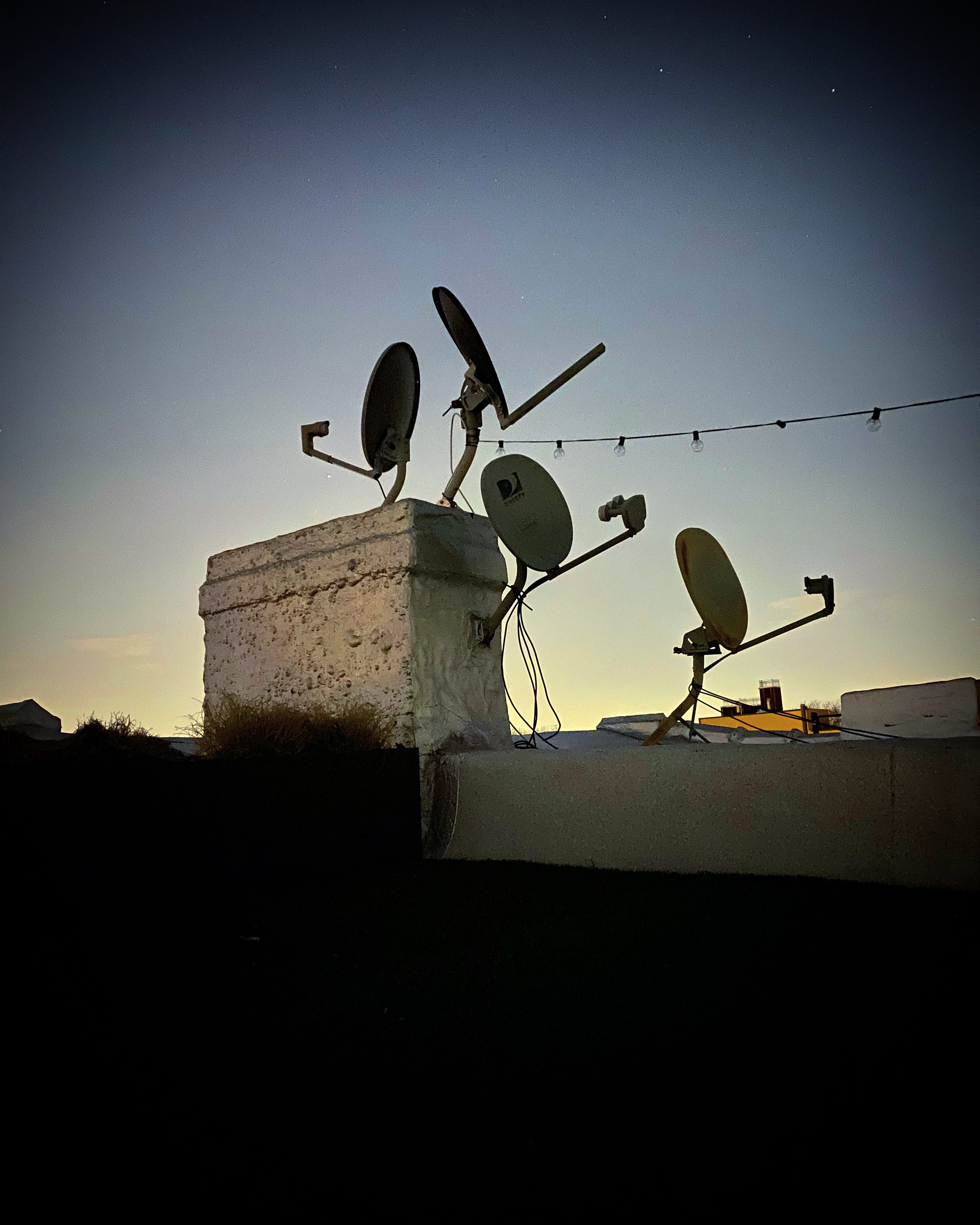
Satellite dishes are an example of an modern urban vestige destined for obscurity. We have a team of them on our roof, staring up at the stars like argumentative astronomers, insistently pointing this way and that. Wires dangle between them, severed ties to their original purpose. It behooves no one to have them removed so they stand and wait for a signal from the sky.
It’s been one year since the World Health Organization announced an official pandemic. Life changed with Vesuvian quickness. Manhattan is full of office cubicles that look like everyone has just stepped out for lunch, covered in a layer of dust. Restaurants are time capsules of what a pre-pandemic lifestyle looked like. Empty chairs and tables crowd together, uncomfortably close.
Now, as the vaccine arrives, the masks that have become so much part of our daily apparel will start dropping off. Filling both drawers and storm drains.
Next winter no doubt I’ll reach into my heavy coat pocket and find a rumpled piece of cloth or catch my nail on a strip of elastic. The mask in my hand will either be the plain medical blue of the early pandemic, or a designy orange one, marking the fashion capitulation of the late covid era.
I’ll no doubt put this artifact away where it will sit in obscurity again. An appendage that we’d like to forget, but will be there just the same.
I'm afraid that masks may not become a vestige as quickly as one might think. They never stopped wearing them in Taiwan after SARS, and I'm pretty happy with not having gotten a cold or a flu in a year. I'm planning on continuing to wear them to places like theaters.